
FUE hair transplant in Pune works by extracting individual hair follicles from a healthy donor area, usually the back or sides of the scalp, and implanting them one by one into thinning or balding regions. The procedure is performed under local anesthesia, involves no linear scarring, and typically takes six to eight hours depending on the number of grafts required. Most patients return to a light routine within a week and begin noticing new growth within four to six months. This guide walks you through the entire process, from your first consultation to your final results, so you know exactly what to expect before you book a consultation.
Table of Contents
What Is an FUE Hair Transplant?
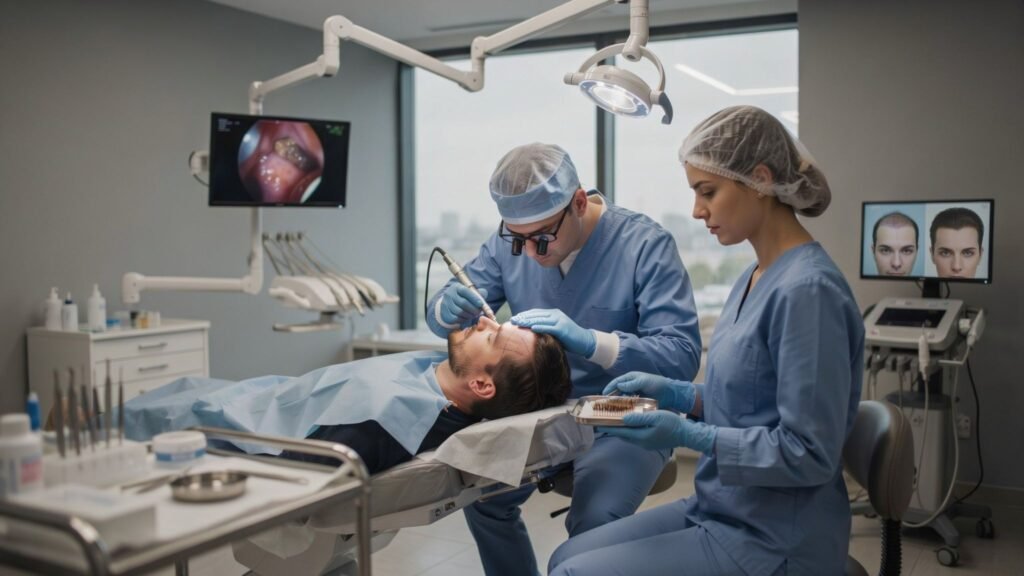
Follicular Unit Extraction, commonly known as FUE, is a minimally invasive hair restoration technique in which individual hair follicles are removed one at a time from a donor area and transplanted into balding or thinning areas of the scalp. Unlike the older FUT (strip) method, FUE does not require removing a strip of scalp tissue, which means no linear scar and a noticeably faster recovery. As a leading option for hair restoration in Pune, FUE has become the preferred choice for patients who want a natural hair transplant in Pune with minimal downtime and undetectable scarring.
How Does a Hair Transplant Work?
To understand how a hair transplant works, it helps to know the biology behind it. Hair on the back and sides of the scalp is genetically resistant to dihydrotestosterone (DHT), the hormone responsible for male and female pattern baldness. This is known as donor dominance. When these DHT-resistant follicles are relocated to thinning areas, they generally continue to grow for a lifetime because they retain their original genetic resistance, even in a new location. This principle is well documented by organisations such as the International Society of Hair Restoration Surgery (ISHRS), and it forms the scientific foundation of every modern hair transplant procedure, including FUE and FUT.
FUE vs FUT: Which Technique Is Better?
Both FUE and FUT are effective, medically recognized methods of hair restoration, and the right choice depends on your hair loss pattern, donor supply, and lifestyle. The table below compares the two so you can discuss the best option for your case during your consultation.
| Factor | FUE (Follicular Unit Extraction) | FUT (Follicular Unit Transplantation) |
|---|---|---|
| Technique | Follicles extracted individually | A strip of scalp is removed and dissected |
| Scarring | Tiny, dot-like marks, not visible | Thin linear scar along donor area |
| Recovery time | Faster, usually 5 to 7 days | Longer, 10 to 14 days |
| Pain and discomfort | Minimal | Slightly more due to stitches |
| Graft yield per session | Moderate to high | Very high |
| Suitability | Short hairstyles, active lifestyles | Patients needing very high graft numbers |
Many patients researching hair transplants in Pune choose FUE for its natural, scar-free appearance and quicker return to daily activities.
Step-by-Step FUE Hair Transplant Procedure
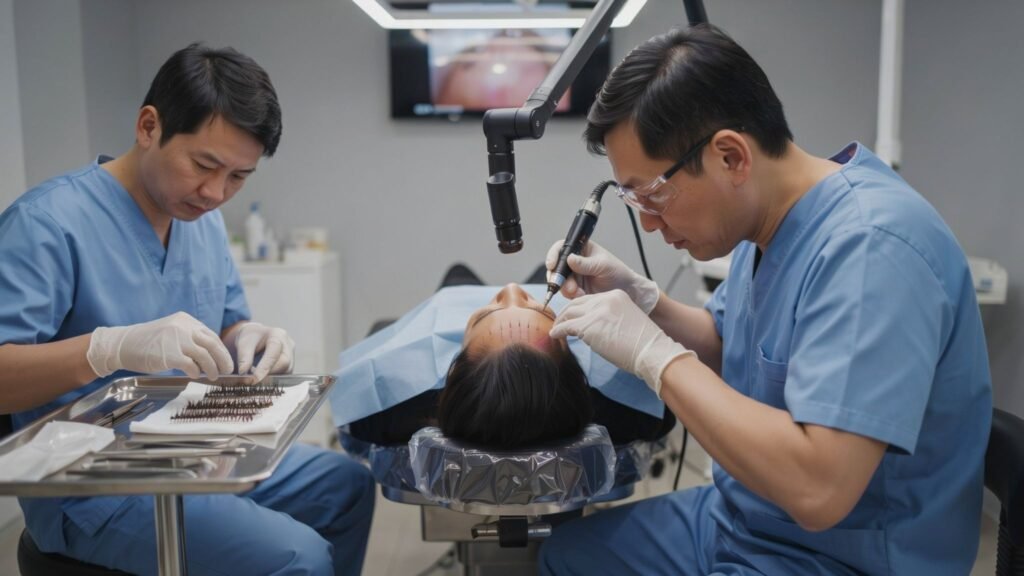
Here is exactly what happens during a professionally performed FUE hair transplant, from the moment you arrive to the moment you walk out.
1. Consultation and Scalp Assessment
Your surgeon examines your scalp, discusses your hair loss pattern (often graded using the Norwood or Ludwig scale), evaluates donor hair density, and reviews your medical history. This step determines whether you are a good candidate and roughly how many grafts you will need.
2. Donor Area Trimming
The donor area, typically at the back and sides of the scalp, is trimmed short so individual follicles can be accessed and extracted cleanly.
3. Local Anaesthesia
The donor and recipient areas are numbed with local anesthesia. Patients remain fully awake and comfortable throughout the procedure, and mild sedation can be offered for anxious patients.
4. Follicular Extraction
Using a fine, specialized punch tool, the surgeon extracts individual follicular units, usually one to four hairs each, directly from the donor area, one graft at a time.
5. Graft Sorting and Preservation
Extracted grafts are sorted by the number of hairs they contain and stored in a chilled, nutrient-rich solution to keep them viable until implantation.
6. Recipient Site Creation
The surgeon creates tiny recipient sites in the balding area, carefully angling and directing each incision to match your natural hair growth pattern. This step is critical for a natural hair transplant in Pune outcome, since incorrect angling can make results look unnatural.
7. Graft Implantation
Each graft is placed into its recipient site by hand, following the natural density and direction of surrounding hair for a seamless, undetectable result.
8. Post-Procedure Care and Instructions
Once implantation is complete, the scalp is cleaned and dressed if needed, and you receive detailed aftercare instructions covering medication, sleeping position, washing, and activity restrictions for the days ahead.
Recovery Timeline After FUE Hair Transplant
Hair Transplant Recovery happens gradually, and knowing what to expect at each stage helps reduce anxiety and supports better healing. The table below outlines a typical recovery timeline, though individual healing speed can vary.
| Timeframe | What to Expect |
|---|---|
| Days 1 to 3 | Mild swelling, redness, and scalp tenderness in both donor and recipient areas |
| Day 4 to 7 | Scabs begin to form and gradually flake off; most patients resume light work |
| Weeks 2 to 3 | Transplanted hair may shed; this is normal and expected and called “shock loss.” |
| Month 1 | The scalp looks mostly healed; follicles are resting beneath the surface |
| Month 3 to 4 | New, thin hair growth becomes visible in the transplanted area |
| Month 6 to 9 | Hair thickens and density noticeably improves |
| Month 12 to 18 | Final results are visible, with mature thickness and natural texture |
Recovery speed and outcomes vary depending on donor hair quality, individual healing response, hair loss pattern, and how closely aftercare instructions are followed.
When Will You See Hair Growth Results?
It is normal for newly transplanted hair to shed within two to three weeks after surgery. This does not mean the transplant has failed. The follicles are still alive beneath the scalp and enter a resting phase before regrowing. Most patients start seeing fine new growth around the fourth month, with noticeable thickening between months six and nine. Full, mature results typically take twelve to eighteen months to appear. Results are not guaranteed to look identical for every patient, since outcomes depend on donor density, scalp condition, and adherence to post-operative care.
Is FUE Hair Transplant Painful?
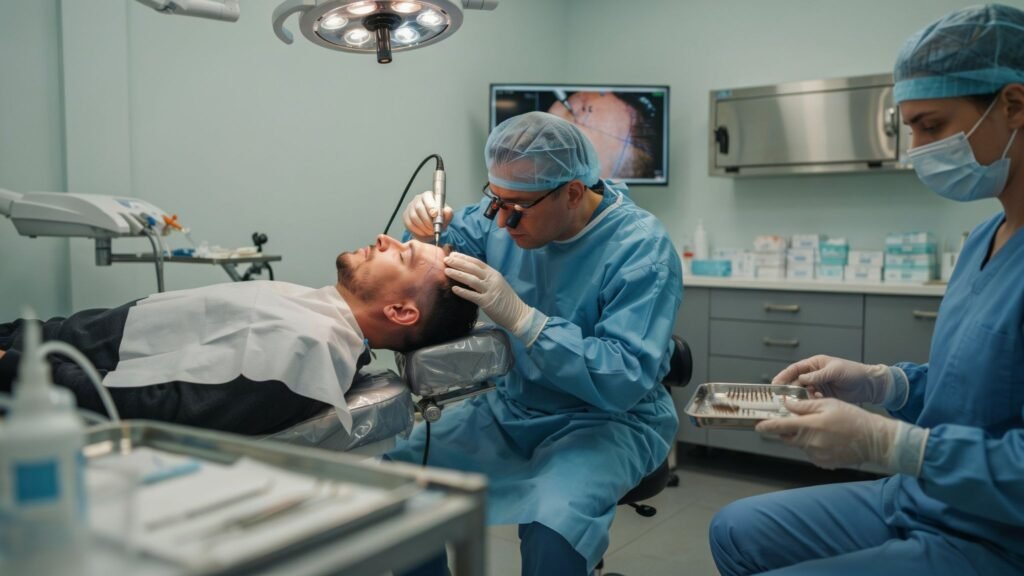
Most patients describe FUE as far more comfortable than expected. Local anesthesia numbs the scalp before extraction and implantation begin, so the procedure itself is largely painless. Mild soreness, tightness, or tenderness in the days following surgery is common and is usually manageable with the pain relief medication your surgeon prescribes.
How Many Grafts Will You Need?
The number of grafts required depends on the extent of your hair loss, the size of the area being treated, and your desired density. Patients with early-stage thinning may need anywhere from 1,000 to 2,000 grafts, while advanced baldness can require 3,000 grafts or more across multiple sessions. Your surgeon will recommend an exact number after assessing your scalp in person, taking into account your donor density, hair caliber, and the overall coverage you are hoping to achieve. It is worth remembering that donor supply is finite, so an experienced surgeon will plan graft distribution carefully rather than overharvesting the donor area, which helps protect both your current results and any future sessions you may need as hair loss progresses.
What Are the Risks and Side Effects of FUE?
FUE is considered a safe, well-established procedure when performed by a qualified, experienced surgeon, but like any surgical procedure, it carries some risk. Being aware of possible side effects helps you make an informed decision.
- Temporary swelling or redness in the donor and recipient areas
- Mild scalp numbness that usually resolves within a few months
- Small, pinpoint scarring in the donor area that is generally not visible
- Folliculitis, a temporary inflammation around new hair follicles
- Shock loss, or temporary shedding of existing or transplanted hair
- Rarely, infection or poor graft survival if aftercare is not followed
Choosing an experienced, surgeon-led clinic and closely following aftercare instructions significantly reduces the likelihood of complications.
Who Is a Good Candidate for FUE Hair Transplant?
Not everyone experiencing hair loss is an ideal candidate for FUE, which is why an in-person or virtual scalp assessment matters. Good candidates generally have stable, well-defined hair loss, sufficient donor density at the back and sides of the scalp, and realistic expectations about outcomes. FUE works well for both male and female pattern baldness, receding hairlines, crown thinning, and eyebrow or beard restoration in some cases. Patients with very limited donor supply, certain scalp conditions, or unmanaged medical conditions may need alternative treatment plans, which your surgeon will discuss openly during consultation rather than promising a fixed outcome upfront.
Aftercare Tips to Protect Your FUE Results
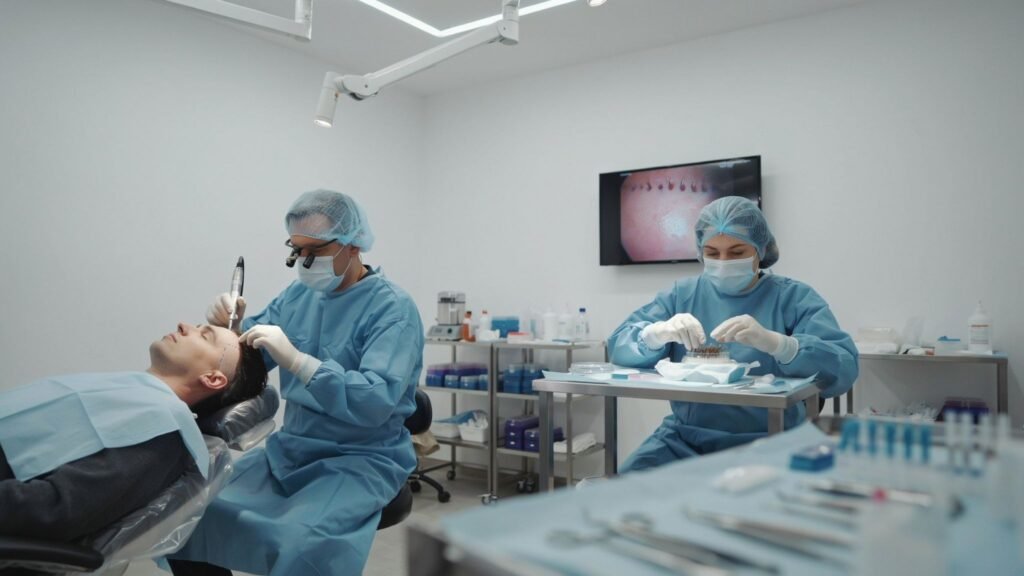
Following your surgeon’s aftercare instructions closely has a direct impact on graft survival and the quality of your final results. General guidance typically includes the following, though your clinic will tailor instructions to your specific case.
- Avoid touching, scratching, or picking at the transplanted area, especially during the first ten days
- Sleep with your head slightly elevated for the first few nights to reduce swelling
- Follow the prescribed washing routine, usually starting gently after 48 to 72 hours
- Avoid direct sun exposure on the scalp for at least a few weeks
- Skip strenuous exercise, swimming, and sweating for around two to three weeks
- Avoid alcohol and smoking during the early healing period, as both can affect graft survival
- Attend all follow-up appointments so your surgical team can track your healing and growth progress
What Is the Cost of Hair Transplant in Pune?
Hair Transplant Cost in Pune varies depending on the number of grafts needed, the technique used, the complexity of your case, and the experience of the surgical team. Clinics typically price FUE per graft, so a patient needing 1,500 grafts will pay less than one needing 4,000 grafts. Other factors that can influence the final price include whether the case requires multiple sessions, the technology used for extraction, and the level of post-operative support and follow-up care included in the package. Rather than choosing based on the lowest advertised price, it is worth prioritizing surgeon qualifications, clinic hygiene standards, and previous patient outcomes, since a poorly performed low-cost procedure can be more expensive to correct later. A personalized, accurate quote can only be given after an in-person or virtual scalp assessment.
Why Choose Arnica Clinic for FUE Hair Transplant in Pune?
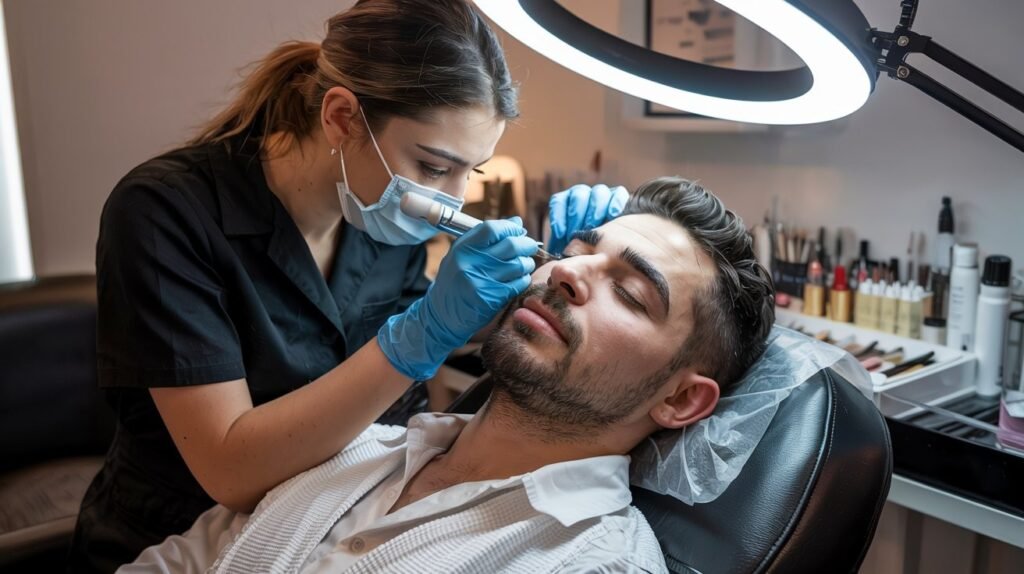
Arnica Clinic approaches every FUE hair transplant in Pune with a surgeon-led, patient-first process, from the initial scalp assessment through to long-term aftercare. The clinic focuses on natural hairline design, meticulous graft handling, and transparent, realistic expectation-setting rather than guaranteed-result promises. Patients from across Pune, including those researching options near Koregaon Park, Baner, Viman Nagar, and Kothrud: choose Arnica Clinic for its clinical approach to hair restoration in Pune and its emphasis on safety, hygiene, and natural-looking outcomes.
Frequently Asked Questions About FUE Hair Transplant
What is an FUE hair transplant?
FUE, or Follicular Unit Extraction, is a hair restoration technique where individual hair follicles are extracted from a donor area and implanted into thinning or bald areas, without removing a strip of scalp tissue.
Is FUE better than FUT?
FUE generally offers faster recovery, no linear scarring, and more flexibility for short hairstyles, while FUT can yield a higher number of grafts in a single session. The better option depends on your specific hair loss pattern and goals, which your surgeon can assess during consultation.
How long does FUE surgery take?
A full FUE session typically takes between six and eight hours, depending on the number of grafts being transplanted. Larger sessions may be split across two consecutive days.
Is FUE hair transplant painful?
The procedure is performed under local anesthesia, so most patients feel little to no pain during surgery. Mild soreness or tenderness afterward is normal and manageable with prescribed medication.
How many grafts will I need?
This depends on the extent of your hair loss. Early-stage thinning may require 1,000 to 2,000 grafts, while more advanced baldness can require 3,000 or more, sometimes across multiple sessions.
When will new hair start growing?
Most patients see initial new growth around the fourth month after surgery, with visible thickening between months six and nine and full results by twelve to eighteen months.
Are FUE results permanent?
Transplanted follicles are typically taken from DHT-resistant donor areas, so they generally continue growing for life. However, surrounding non-transplanted hair can still thin over time due to ongoing genetic hair loss, so results and long-term appearance vary by individual. Many patients choose to combine their transplant with medical therapies, such as topical or oral treatments recommended by their surgeon, to help protect their existing native hair alongside the newly transplanted grafts.
What is the recovery time after FUE?
Most patients return to light work within five to seven days. Scabbing typically clears within ten days, and strenuous activity can usually resume after two to three weeks, depending on your surgeon’s guidance.
Are there any side effects?
Possible side effects include temporary swelling, mild numbness, scabbing, folliculitis, and short-term shedding known as shock loss. Serious complications are rare when the procedure is performed by an experienced surgical team.
What is the cost of FUE Hair Transplant in Pune?
The cost depends on the number of grafts required, the technique used, and the clinic’s expertise. Since every case is unique, the final cost may vary. Arnica Clinic offers personalized consultations to evaluate your hair loss and provide a transparent, customized quote based on your individual needs.
Final Thoughts: Is FUE Right for You?
FUE Hair Transplant in Pune offers a scientifically grounded, minimally invasive way to restore thinning or balding areas with natural-looking, long-lasting results. While the procedure is safe and well-established, outcomes depend on factors such as donor hair quality, the extent of hair loss, and how well aftercare instructions are followed, so no reputable clinic should promise identical results for every patient. The best way to know if you are a good candidate is a detailed scalp assessment with a qualified surgeon.
Ready to take the next step? Book a personalized consultation with Arnica Clinic today and get a clear, honest assessment of your hair restoration options in Pune.