
PRP Hair Treatment in Pune

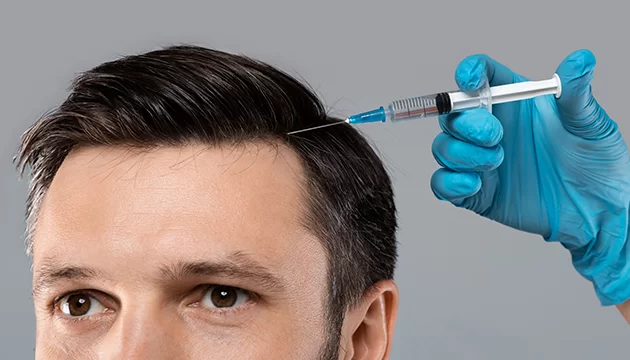
Table of Content

Our hair is one of the features we notice first when we look in the mirror, and losing it can feel deeply personal. If you’ve ever wished you could have a mane like Rapunzel’s and keep it for life, you’re not alone. But real hair, unlike fairy tales, thins with age, stress, hormones, and genetics, and hair loss affects the majority of adults at some point. PRP hair treatment in Pune is one of the most researched non-surgical options for addressing this, and at Arnica Clinic, it’s a treatment we approach with honest expectations rather than dramatic promises.
What Is PRP Treatment?
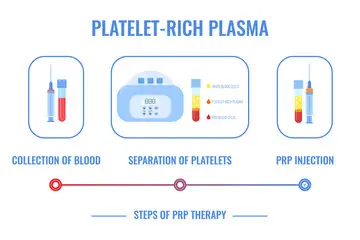
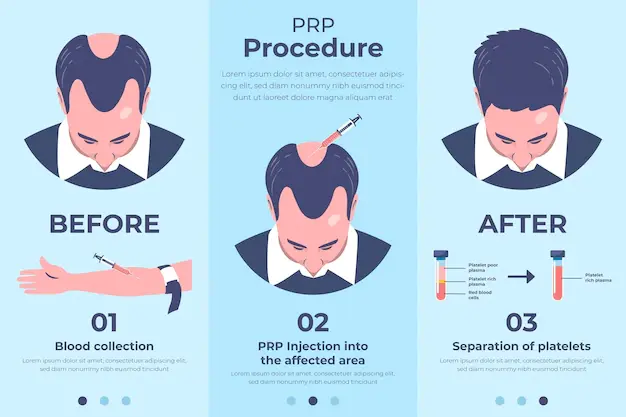
PRP, or platelet-rich plasma, treatment is a medical procedure that uses a concentrated portion of your own blood to support hair growth. It’s built on three simple steps: drawing, processing, and injecting.
Platelets are one of the blood’s “first responders,” rushing to a wound to stop bleeding and kickstart the healing process. Researchers found that when platelets are concentrated and reintroduced into an area of the body, such as the scalp, they can support tissue repair and regeneration in that area. Over the past decade, this same principle has been applied to hair restoration, with PRP now used alongside other hair loss treatments to support follicle health.
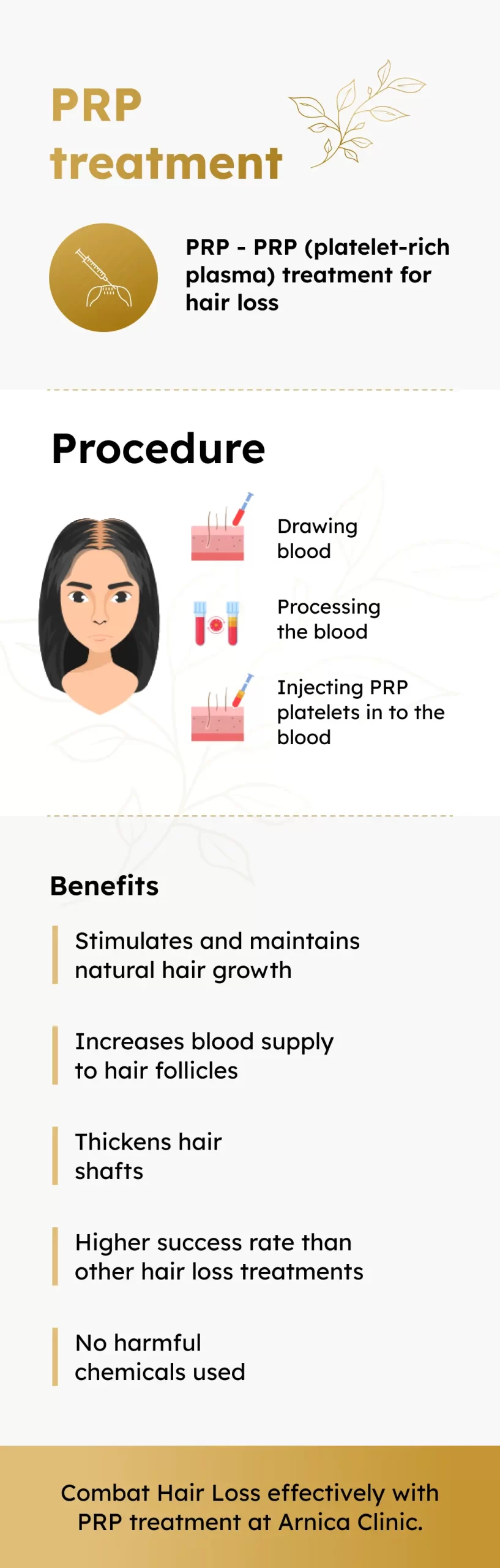
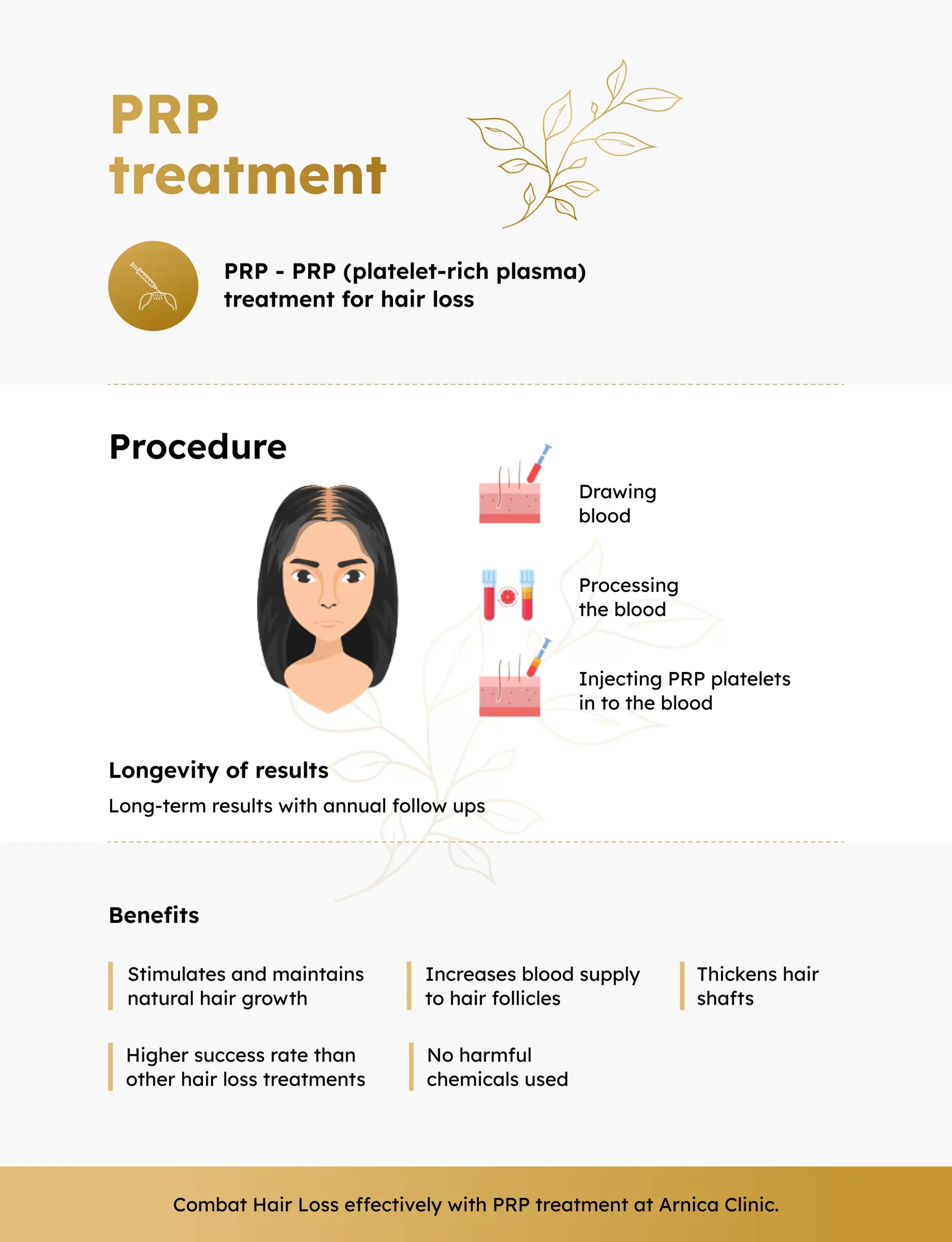
Table of Content
The 3-Step PRP Procedure at Arnica Clinic
At Arnica, the procedure follows a consistent three-step process:
Drawing
A small amount of blood is drawn from a vein in your arm by our medical team, similar to a routine blood test.
Processing
The blood sample is placed in a centrifuge and spun to separate its components. This isolates the platelet-rich plasma from the rest of the blood, concentrating the platelets that will be used in the treatment.
Injecting
The concentrated platelets are then injected into targeted areas of the scalp using fine needles. A full session typically takes under an hour, and most patients are able to resume their normal activities immediately afterward, with no real downtime involved.
Aftercare: What to Do After a Session
What you do in the days following treatment plays a real role in how well your scalp responds. We generally advise patients to:
Use a pH-balanced, sulfate-free shampoo for the first three days.
Wait at least 6 hours before applying any hair products or styling treatments.
Avoid saunas, steam rooms, and swimming pools for two days after treatment.
Skip vigorous exercise and prolonged sun or heat exposure for at least two days.
Avoid coloring or chemically treating the hair until your dermatologist confirms it’s safe to do so.
These steps aren’t about being overly cautious; they simply give the treated area the calm environment it needs to respond properly.
Who Can Benefit from PRP Hair Loss Treatment in Pune?
This approach tends to work best for adults over 18 with patterned hair thinning, particularly when it’s caught in its earlier stages. Both men and women with androgenetic (patterned) hair loss are generally good candidates.
That said, PRP isn’t a fit for every kind of hair loss. It’s not designed to regrow hair on scalp areas with long-term scarring or completely dormant follicles, and it isn’t a substitute for treating underlying medical causes such as thyroid conditions or nutritional deficiencies, which is why a proper diagnosis matters before starting. At Arnica, we begin with a scalp assessment to understand what’s actually driving your hair loss before recommending PRP or any other protocol.
What Results Can You Expect?
A typical course involves 6 to 8 sessions, and most patients start noticing early changes, such as reduced shedding, after 2 to 3 sessions. A visible increase in hair density tends to build gradually between the first and fourth sessions rather than appearing all at once.
It’s worth setting expectations honestly here: PRP supports and strengthens existing follicles; it does not reverse hair loss or restore hair in areas where follicles are no longer active. For more extensive or advanced hair loss, your dermatologist may recommend combining PRP with other treatments, such as medical therapy or, in appropriate cases, hair transplantation, rather than relying on PRP alone.
Results also vary based on how consistently sessions are followed and how early treatment begins relative to when thinning was first noticed. This is one reason we track progress photos and density notes across sessions at Arnica, so both you and your dermatologist can see, rather than guess at, how your scalp is actually responding over time.
How Long Do the Results Last?
PRP is best understood as a long-term maintenance therapy rather than a one-time fix. After completing your initial course of sessions, most patients maintain their results with periodic follow-up sessions, often spaced around a year apart, alongside a healthy scalp care routine at home.
How Effective Is PRP for Hair Loss?
PRP is thought to work by improving blood supply to the hair follicle and supporting the thickness of existing hair shafts. Published studies on PRP for androgenetic alopecia report meaningfully improved hair density and reduced shedding in a large share of treated patients, particularly when treatment starts early. Results do vary from person to person, though, depending on the extent and cause of hair loss, which is why we avoid quoting a single universal success rate.
Interestingly, PRP therapy itself isn’t new. It has been used since the 1980s to support healing in injured tendons, ligaments, and muscles, long before it was adapted for hair restoration.
What Are the Advantages of PRP Treatment?
Did you know?
What Does PRP Hair Treatment Cost in Pune?
The cost of PRP hair treatment varies from patient to patient, and honestly, there’s no single number that applies to everyone. A few factors that shape the final cost include:
Severity of Hair Loss
More advanced thinning may require additional sessions to see meaningful results.
Number of Sessions
A full course typically runs 6 to 8 sessions, and package pricing usually reflects that.
Combination Treatments
If PRP is paired with other hair loss treatments or homeopathic support, the overall plan cost will reflect that combination.
Clinic Experience & Technology
Pricing at a dermatologist-led clinic using proper centrifuge technology and sterile protocols reflects the expertise and safety behind each session.
Rather than publishing a flat number that may not apply to your situation, we recommend a consultation where your scalp condition is assessed and a realistic session count and cost estimate are discussed upfront.
PRP vs. Other Hair Loss Treatments in Pune
PRP is one option among several hair loss treatments in Pune, and it isn’t always used on its own. Depending on your diagnosis, your dermatologist might recommend PRP alongside topical or oral medical therapy, or, for more advanced cases, alongside procedures like hair transplantation. Because hair loss can stem from very different causes, from genetics to hormonal shifts to scalp conditions, the right plan usually looks different from patient to patient rather than following a single template.
If you’re also exploring ways to support overall skin health alongside your hair restoration journey, treatments like a Hydrafacial treatment in Pune are a popular complementary option many of our patients add to their routine, though it addresses skin concerns rather than hair loss directly.
Why Choose Arnica Clinic for Your PRP Treatment?
Arnica Clinic has built a reputation as the best PRP hair clinic in Pune by keeping every protocol grounded in an actual scalp assessment rather than a one-size-fits-all package. We offer a range of hair treatments, from PRP therapy to medical management and referrals for hair transplantation, so your plan is built around what your hair loss actually needs rather than a single default option.
If you’re comparing clinics for PRP treatment in Pune, our team takes the time to explain what realistic results look like for your specific case before any session begins. Make an appointment for a consultation and an honest read on what to expect.
About The Author
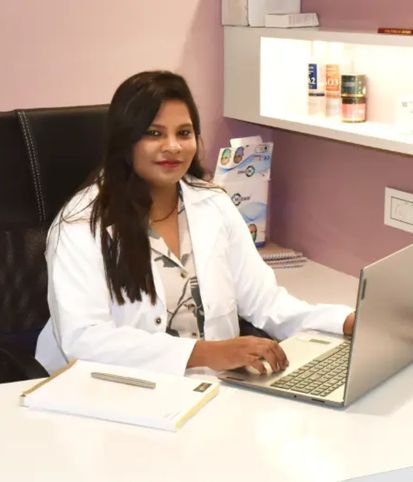
Meet Your Doctor: Dr. Shraddha Kavathekar
Dr. Shraddha Kavathekar leads skin and cosmetology care at Arnica Clinic. She holds a postgraduate qualification in clinical cosmetology alongside her degree in homeopathy and has over 8 years of experience in aesthetic and dermatological care.
Every Botox treatment is planned only after a detailed clinical assessment rather than following a one-size-fits-all approach. Dr. Shraddha carefully evaluates facial muscle activity, skin quality, wrinkle severity, facial balance, medical history, and the patient’s aesthetic goals before recommending Botox. When appropriate, she may also combine Botox with complementary skin rejuvenation treatments to achieve natural-looking, balanced, and long-lasting results while preserving normal facial expressions.
Frequently Asked Questions
Most patients describe it as mildly uncomfortable rather than painful, similar to a series of small pinpricks. Numbing options can be discussed with your dermatologist if you’re particularly sensitive.
PRP uses your own concentrated platelets to support and strengthen existing hair follicles, while a hair transplant surgically relocates hair follicles from one area of the scalp to another. PRP is non-surgical with far less downtime, but it doesn’t create new follicles where none exist.
Generally, patients need to be above 18 years of age, since hair loss patterns are usually better established and easier to diagnose accurately by adulthood.
Most patients start noticing reduced shedding after 2 to 3 sessions, with a more visible increase in density typically developing between the first and fourth sessions.
No. PRP works best for patterned (androgenetic) hair thinning, especially in its earlier stages. It’s less effective on scalp areas with long-term scarring or completely inactive follicles, and it doesn’t treat underlying causes like thyroid issues on its own.
Cost depends on the severity of hair loss, the number of sessions required, whether PRP is combined with other treatments, and the clinic’s experience and equipment, which is why a personalized consultation gives a more accurate estimate than a flat quote.
Arnica’s approach starts with a proper scalp assessment rather than offering PRP as a default answer to every hair concern, so patients get a plan suited to what’s actually causing their hair loss.
Yes. PRP is often used alongside medical therapy or, in more advanced cases, alongside hair transplantation, depending on what your dermatologist finds during your scalp assessment.